Is a good company profile help to grow your company value to your customer
A well-crafted company profile plays a vital role in growing your company’s value to customers. It serves as a comprehensive document that encapsulates your business’s essence, offering insights into its mission, vision, products, services, and achievements. Here’s an in-depth exploration of how a good company profile contributes to business growth and enhances customer value.
1. Establishing Brand Identity and Recognition
First Impressions: A company profile often serves as the first point of contact between a business and potential customers. A well-designed and thoughtfully written profile creates a positive first impression, conveying professionalism and credibility. It communicates who you are, what you do, and why you stand out in the marketplace.
Consistent Branding: By aligning the company profile with your brand’s tone, style, and messaging, you reinforce your brand identity. Consistency across all brand touchpoints helps build recognition and trust, making it easier for customers to remember and identify your business.
2. Building Credibility and Trust
Showcasing Expertise and Experience: A good company profile highlights your business’s history, milestones, and expertise. It provides a narrative that showcases your journey, achievements, and the expertise that sets you apart from competitors. This history builds credibility, demonstrating to customers that your company has a solid foundation and a track record of success.
Customer Testimonials and Case Studies: Including customer testimonials and case studies in your profile adds a layer of social proof. Potential customers are more likely to trust your business when they see evidence of satisfied clients and successful projects. This trust is a critical factor in converting prospects into loyal customers.
3. Enhancing Customer Understanding
Clear Communication of Products and Services: A company profile provides an opportunity to clearly and concisely explain what your business offers. By detailing your products, services, and unique selling points, you help customers understand how your offerings meet their needs. This clarity reduces confusion and makes it easier for customers to make informed decisions.
Demonstrating Value Proposition: The profile should articulate your value proposition—why customers should choose your business over others. By focusing on the benefits and solutions your products or services provide, you can resonate with your target audience, highlighting how you can solve their problems or improve their lives.
4. Facilitating Marketing and Sales Efforts
A Powerful Marketing Tool: A company profile serves as a foundational marketing tool. It can be used across various platforms, including your website, social media, and promotional materials. Its versatility allows you to reach a broader audience and communicate a consistent message about your business.
Supporting Sales Conversations: Sales teams can use the company profile as a resource during conversations with potential customers. It provides a reference point that outlines key information about the company, making it easier to address customer inquiries and objections. A well-prepared profile can help close deals by reinforcing the company’s strengths and value proposition.
5. Attracting and Retaining Customers
Appealing to Target Audiences: A good company profile is tailored to resonate with your target audience. By understanding the needs and preferences of your ideal customers, you can craft a profile that speaks directly to them, highlighting aspects of your business that are most relevant to their interests and pain points. This targeted approach increases the likelihood of attracting and retaining customers.
Demonstrating Commitment to Quality: Your profile can also convey your commitment to quality and customer satisfaction. By emphasizing your company’s dedication to excellence, continuous improvement, and customer service, you reassure potential customers that they will receive high-quality products or services.
6. Strengthening Business Partnerships
Building Strategic Relationships: A company profile is not only for customers but also for potential business partners. It helps other businesses understand what you offer and how a partnership could be mutually beneficial. By presenting your company’s strengths, values, and strategic goals, you can attract partners who align with your vision and objectives.
Facilitating Networking and Collaboration: At industry events, conferences, or business meetings, a well-prepared company profile can serve as an effective networking tool. It provides a concise overview of your business that you can share with potential collaborators, suppliers, or investors, opening the door to new opportunities.
7. Enhancing Online Presence and SEO
Boosting SEO: A digital version of your company profile on your website can improve your search engine optimization (SEO). By including relevant keywords and phrases that potential customers might search for, your profile can help drive organic traffic to your website. Increased visibility in search results makes it easier for customers to find your business online.
Engaging Content for Digital Platforms: Your company profile can be repurposed as engaging content across various digital platforms, including social media, email newsletters, and online directories. Sharing snippets of your profile or linking back to it from different platforms enhances your online presence and keeps your audience informed and engaged.
8. Supporting Investor Relations
Attracting Investors: For companies seeking investment, a detailed and professional company profile is essential. It provides potential investors with a comprehensive understanding of your business, including its financial health, market position, and growth potential. A well-prepared profile can be the deciding factor for investors considering funding your business.
Transparency and Accountability: A company profile that includes information on governance, leadership, and corporate responsibility demonstrates transparency and accountability. These qualities are important to investors who want to ensure they are backing a company that operates ethically and responsibly.
9. Facilitating Recruitment and Talent Acquisition
Attracting Top Talent: A good company profile is an important tool for recruitment. It gives potential employees a glimpse into your company’s culture, values, and opportunities for growth. By showcasing what makes your company a great place to work, you can attract top talent who align with your company’s mission and vision.
Employer Branding: Your profile contributes to your employer brand, the perception of your company as a place to work. A strong employer brand attracts candidates who not only have the necessary skills but also share your company’s values and goals. This alignment can lead to higher employee satisfaction and retention.
10. Ensuring Regulatory Compliance and Industry Standards
Meeting Industry Requirements: In some industries, having a comprehensive company profile is necessary to comply with regulatory standards or to participate in bidding processes for contracts. A detailed profile that includes certifications, compliance with industry standards, and quality assurances can position your company as a credible and reliable partner in the industry.
Maintaining Corporate Governance: Including information on corporate governance, ethical practices, and social responsibility in your profile helps demonstrate your company’s commitment to operating with integrity. This can enhance your reputation with both customers and stakeholders, reinforcing trust and loyalty.
11. Adapting to Market Changes and Customer Needs
Flexibility and Scalability: A good company profile is not static; it evolves with your business. As your company grows, expands its offerings, or enters new markets, your profile should be updated to reflect these changes. This adaptability ensures that your profile remains relevant and continues to resonate with your target audience.
Responding to Customer Feedback: Incorporating customer feedback and insights into your company profile can demonstrate your commitment to continuous improvement. By showing that you listen to your customers and adapt accordingly, you build stronger relationships and increase customer loyalty.
12. Long-Term Business Growth
Sustaining Competitive Advantage: A well-maintained company profile helps sustain your competitive advantage over time. By continuously updating and refining your profile to reflect the latest developments, trends, and customer expectations, you ensure that your business remains relevant and appealing in a dynamic market.
Fostering Innovation: Highlighting your company’s commitment to innovation in your profile can attract forward-thinking customers, partners, and employees. By positioning your business as a leader in innovation, you create a perception of progressiveness and adaptability, which are key drivers of long-term growth.
Conclusion
A good company profile is a powerful tool that can significantly contribute to your company’s growth and enhance its value to customers. It establishes your brand identity, builds credibility, facilitates marketing efforts,
and supports business development across various dimensions. By effectively communicating your company’s strengths, values, and unique selling points, a well-crafted profile helps attract and retain customers, forge strategic partnerships, and drive
long-term success in an increasingly competitive marketplace. Whether your goal is to increase sales, attract investment, or build a strong employer brand, a good company profile is essential for achieving and sustaining business growth.
Best corporate company profile design service company need to follow best strategy
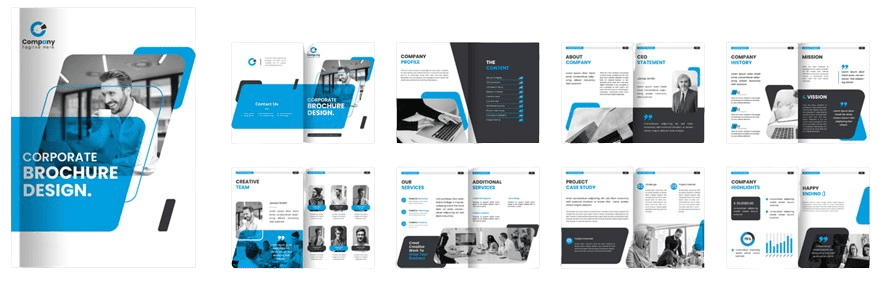
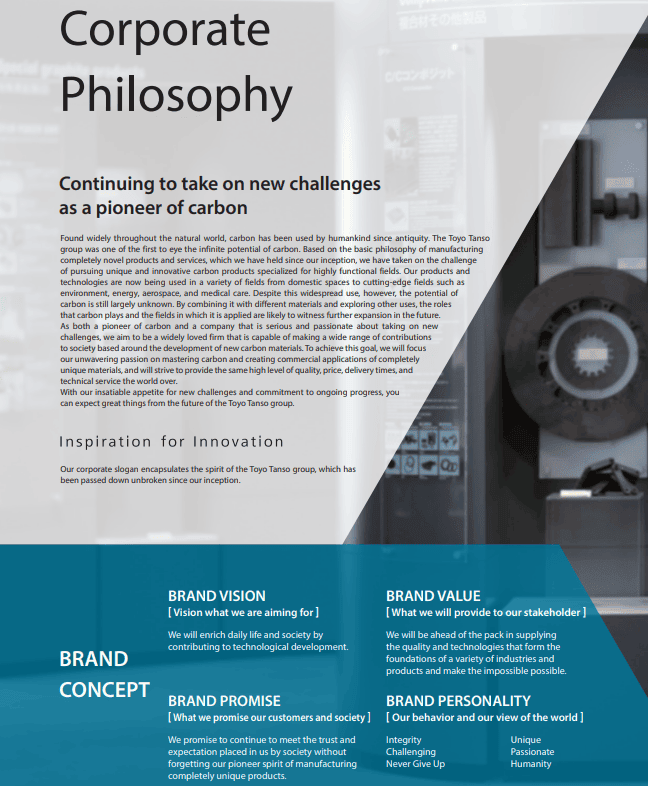
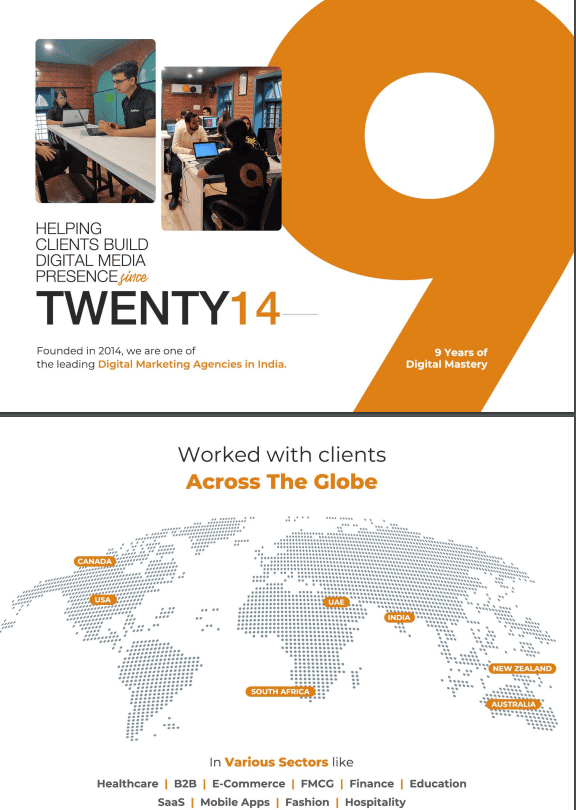
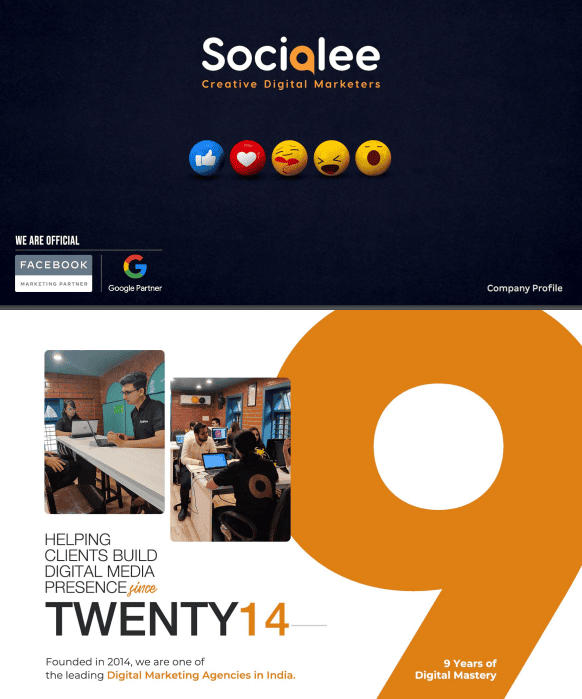
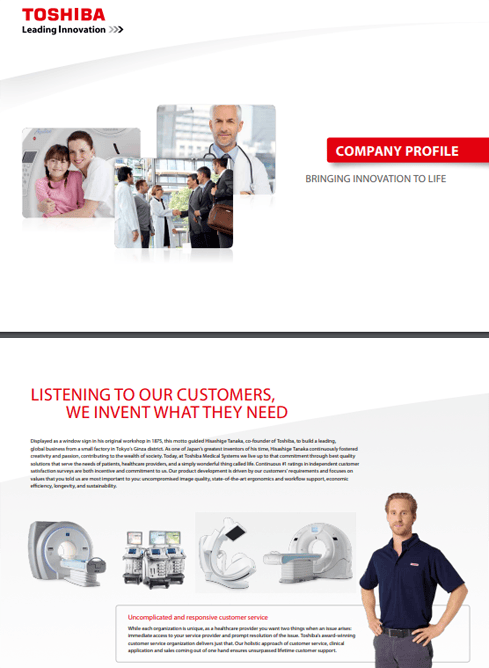
A best-in-class corporate company profile design service company must begin with a strategy-first approach, not a design-first mindset. The most successful firms understand that a company profile is not just a brochure but a strategic business document
that communicates credibility, positioning, and value to stakeholders such as clients, investors, partners, and regulators. Therefore, the first and most important strategy is deep discovery and research. This includes understanding the client’s business
model, industry landscape, competitive positioning, brand personality, target audience, and business goals. A strong service provider conducts stakeholder interviews, reviews existing brand assets, analyzes competitors’ profiles, and clarifies the
primary purpose of the profile—whether it is for sales, tenders, investor pitching, or corporate branding. Based on this insight, the agency defines a clear narrative structure, key messaging pillars, and tone of voice. Without this strategic foundation,
even the most visually attractive profile will fail to communicate value or drive results. The best companies position themselves as strategic partners, not just designers, guiding clients on what to say, how to say it, and why it matters to the
audience.
The second essential strategy is delivering integrated content and design excellence that aligns storytelling with visual clarity. A leading corporate profile design service ensures that content development and visual design work together seamlessly.
This means crafting concise, persuasive copy that highlights the company’s strengths, value proposition, achievements, and differentiation, while avoiding generic or exaggerated claims. Information should be logically structured—starting with who the
company is, what problem it solves, how it delivers value, and why it is trustworthy. On the design side, the best firms apply consistent brand identity, professional typography, balanced layouts, and purposeful use of color and imagery. Visual elements
such as infographics, icons, timelines, and charts should simplify complex information rather than decorate pages unnecessarily. White space, hierarchy, and readability are treated as strategic tools, not aesthetic afterthoughts. Additionally, top
companies design profiles with multi-format adaptability in mind, ensuring the profile works equally well as a print document, digital PDF, presentation deck, or website content. This integrated approach ensures that the final profile is not only
visually impressive but also easy to understand, credible, and persuasive across multiple platforms and audiences.
The third key strategy is a strong focus on process transparency, measurable value, and long-term client relationships. The best corporate profile design service companies follow a clear, professional workflow that includes defined milestones, client
feedback loops, revisions, and quality control. They set realistic timelines, communicate expectations clearly, and educate clients throughout the process. Beyond delivery, leading firms measure success by how well the profile supports the client’s
business goals—such as improving sales conversations, winning tenders, enhancing brand perception, or attracting investors. They also provide guidance on how to use the profile effectively and may offer complementary services such as annual updates,
localized versions, or alignment with broader branding initiatives. By maintaining consistency, reliability, and strategic thinking, these companies build trust and long-term partnerships rather than one-time transactions. Ultimately, the best strategy
for a corporate company profile design service company is to combine strategic insight, content intelligence, design excellence, and client-centric execution, positioning itself as an essential branding advisor rather than just a creative vendor.
Why quality company profile important for your company
A quality company profile is an essential strategic asset for any organization because it shapes how the company is perceived by the outside world. It serves as a formal introduction that communicates who the company is, what it does, and what it
stands for. In many cases, a company profile is the first point of contact for potential clients, investors, partners, or even future employees. A well-written and visually appealing profile immediately builds credibility and professionalism, while
a poorly constructed one can create doubt and mistrust. In a competitive business environment, first impressions matter greatly, and a strong company profile helps ensure that this first impression is positive, clear, and memorable. It also allows the
company to control its narrative instead of leaving others to form assumptions based on incomplete or inaccurate information.
One of the most important reasons a quality company profile matters is its role in building trust and credibility. Stakeholders want to know that they are dealing with a legitimate, reliable, and competent organization. A professional profile that
clearly outlines the company’s history, mission, vision, values, and achievements reassures readers that the business is stable and serious about its operations. Including accurate information about leadership, experience, certifications, and past
successes demonstrates transparency and accountability. Trust is a critical factor in business decisions, and a strong company profile reduces uncertainty by presenting the organization as confident, ethical, and well-established. This trust can
directly influence whether a client chooses your services, an investor provides funding, or a partner agrees to collaborate.
A quality company profile is also a powerful marketing and branding tool. It communicates the company’s brand identity, including its personality, unique selling points, and competitive advantages. Through consistent language, tone, and design,
the profile reinforces brand recognition and differentiates the company from competitors. It explains not just what the company does, but why it does it better or differently than others. This clarity helps target audiences understand the value the
company offers and how it solves their problems. In marketing efforts, a company profile can be used across multiple platforms, such as websites, presentations, proposals, and social media, ensuring a consistent brand message. By aligning the profile
with the company’s overall marketing strategy, businesses can strengthen their market position and attract the right audience.
Another key importance of a quality company profile lies in its ability to support business growth and opportunities. When seeking partnerships, contracts, or investment, decision-makers often review a company profile to evaluate whether the organization
aligns with their goals and standards. A well-prepared profile highlights strengths, capabilities, and long-term vision, making it easier for others to see the potential for collaboration. It can also streamline communication by answering common questions
about the company, saving time during negotiations or introductions. For internal use, a company profile can guide employees by clearly communicating the company’s mission and direction, helping them understand their role in achieving organizational goals. In this way, the profile supports both external expansion and internal alignment.
In conclusion, a quality company profile is far more than a simple document; it is a foundational element of a company’s identity and success. It builds trust and credibility, strengthens branding and marketing efforts, and opens doors to new
opportunities for growth and collaboration. By clearly and professionally presenting the company’s story, values, and capabilities, a strong profile ensures consistent communication with all stakeholders. In an increasingly competitive and
information-driven business world, organizations cannot afford to overlook the importance of a well-crafted company profile. Investing time and effort into creating and maintaining a high-quality profile ultimately contributes to a stronger
reputation, better relationships, and long-term business success.